
Air Quality System
We connect cities, data, and technology to support timely decisions for a healthier and more sustainable environment. We enable proactive actions, better planning, and sustainable urban environment management.
What the ASAP Air solution offers?
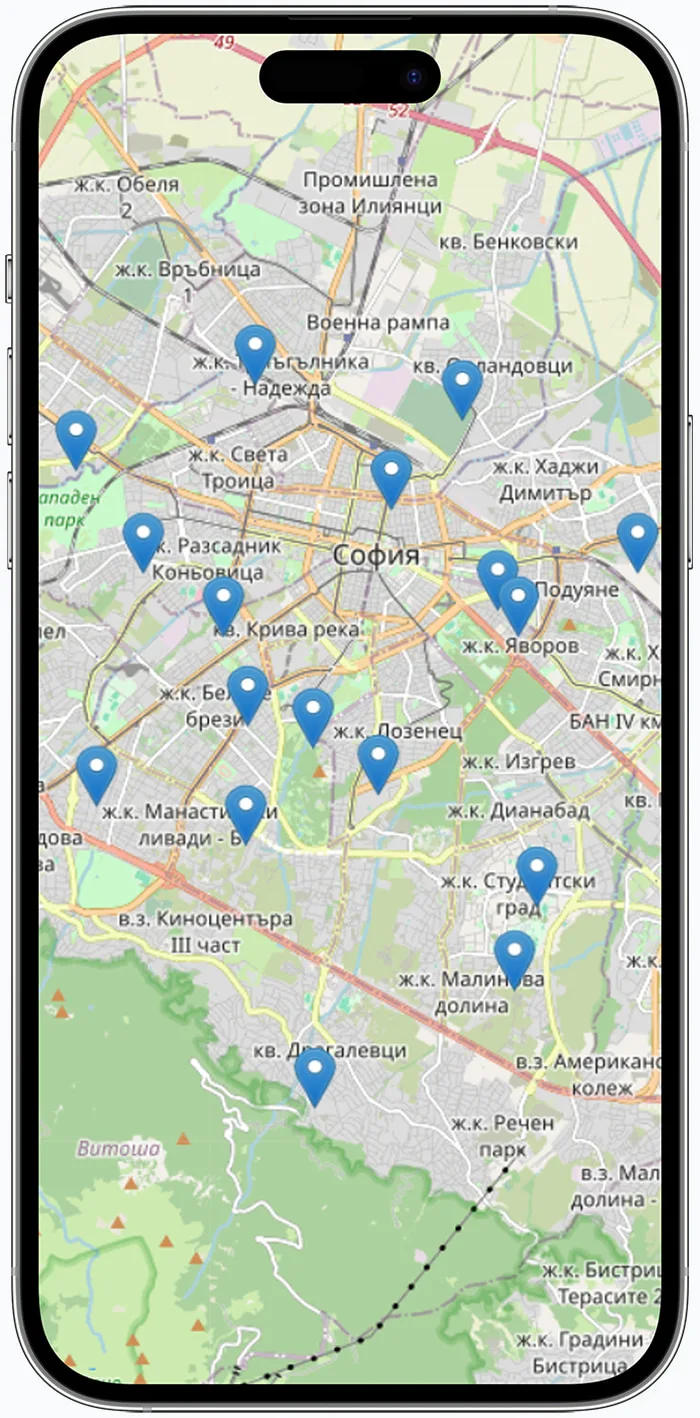
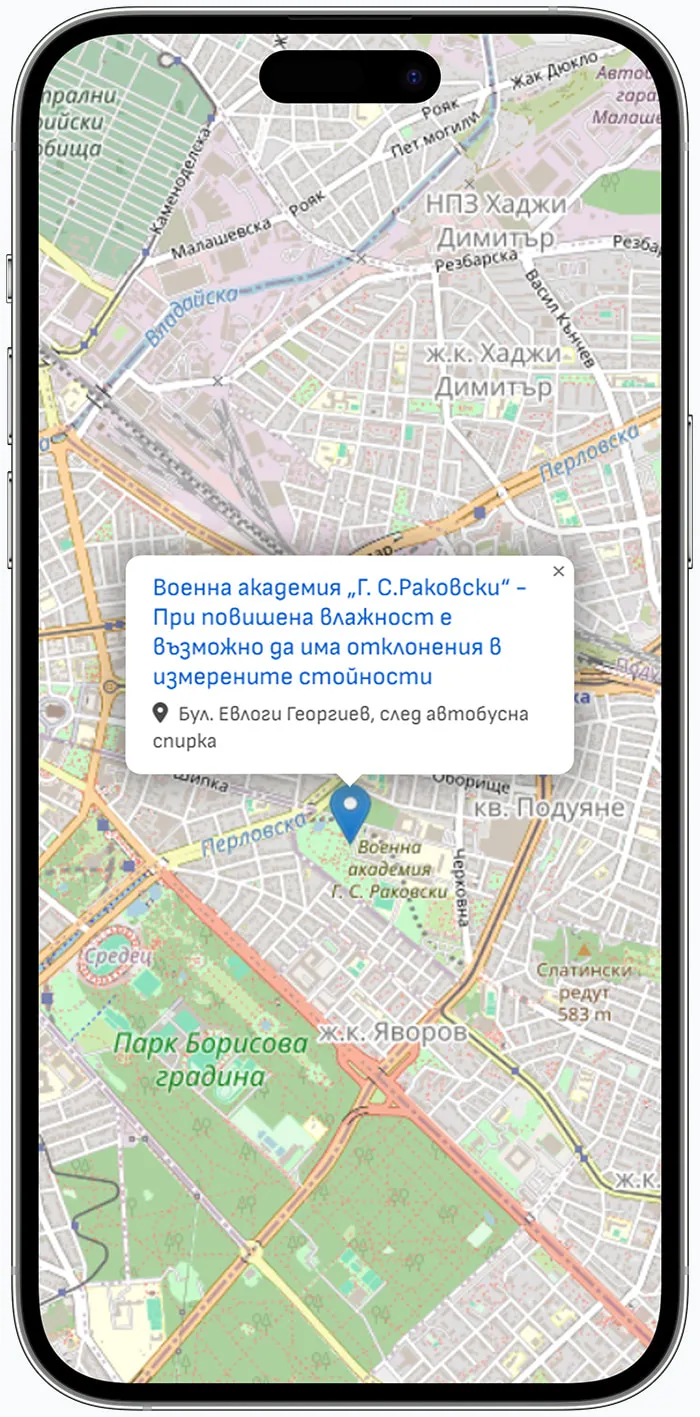
ASAP Air is a comprehensive air quality monitoring system that combines smart sensors, a software platform, and analytical tools into one integrated solution.
The system measures, analyzes, and interprets the main indicators of ambient air quality by tracking key pollutants and parameters with a direct impact on human health and the environment.
Through a network of IoT sensors, data is collected in real time, automatically processed, and visualized in a clear and understandable format. This enables rapid response, strategic planning, and informed decision-making.
ASAP Air does not just measure the air — it provides a tool for its active management.
Key indicators measured by the system
The solution tracks the main parameters of ambient air quality:
Ambient air
Ambient air is outdoor air in the troposphere, excluding air at workplaces. It contains various gases, including oxygen, nitrogen, and carbon dioxide, which are vital for the existence of living organisms.
Pollutant
A pollutant is any substance directly or indirectly introduced by humans into ambient air that is capable of causing harmful effects on public health and/or the environment as a whole.
Level
A level is a defined value of the concentration of a given pollutant in ambient air or its deposition from ambient air onto exposed surfaces over a specific period of time.
Assessment
Assessment is any method for measuring, calculating (including dispersion modeling), forecasting, or approximating the level of a given pollutant in ambient air.
Particulate matter up to 10μm (PM10)
Particulate matter up to 10μm (PM10) includes all particles that pass through a size-selective separator as defined by the reference method for sampling and measuring PM10 levels, with 50% collection efficiency at an aerodynamic particle diameter of up to 10 micrometers.
Particulate matter up to 2.5μm (PM2.5)
Particulate matter up to 2.5μm (PM2.5) includes all particles that pass through a size-selective separator as defined by the reference method for sampling and measuring PM2.5 levels, with 50% collection efficiency at an aerodynamic particle diameter of up to 2.5 micrometers.
Nitrogen oxides
Nitrogen oxides represent the total concentration in parts per billion (ppb) of nitric oxide and nitrogen dioxide, expressed as nitrogen dioxide concentration in micrograms per cubic meter (μg/m³).
Ozone precursors
Ozone precursors are substances that contribute to the formation of ozone in the near-surface atmospheric layer.