10/08/26
Intel and Fortinet have announced a strategic collaboration to develop the Fortinet Security Processor 6 (SP6). The partnership combines Fortine...

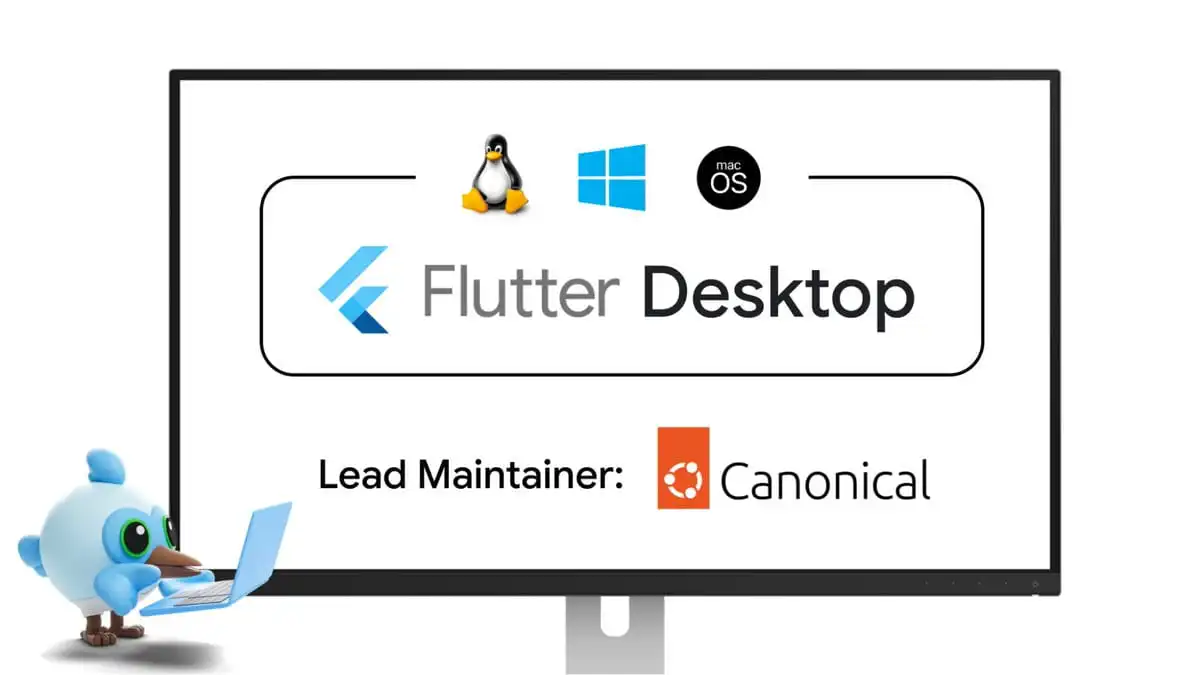
During the Google I/O 2026 conference, Google announced an expansion of its partnership with Canonical, with the company officially taking on the role of the primary maintaining partner and strategic lead for Flutter Desktop across Windows, macOS, and Linux platforms.
The news was shared during the „What’s New in Flutter“ presentation, where members of the Flutter team highlighted Canonical’s significant contribution to the development of the desktop version of the platform over the past years. According to Google, Canonical’s accumulated technical expertise will play a key role both in ongoing maintenance and in the future evolution of Flutter Desktop.
This change represents a first step toward a broader governance model for the Flutter project, aiming to enable more active involvement of external partners in the development of individual components of the platform.
Canonical has been using Flutter as a core technology for developing new Ubuntu applications since 2021. Since then, the company has created and deployed a number of Flutter-based applications, including Ubuntu App Center, Firmware Updater, and Security Center.
Alongside the changes in desktop support, Google also introduced a range of new features for Flutter Desktop. The platform now supports tooltips and content-sized views, as well as the ability to create additional windows and dialog elements. This enables the development of more complex multi-window applications that integrate more naturally within Linux, Windows, and macOS environments.
The company also announced architectural changes to Flutter aimed at reducing dependencies within the core SDK. The Material and Cupertino libraries will now evolve as standalone packages instead of being part of the Flutter core. This approach ensures that framework updates will no longer force developers to automatically adopt UI changes related to new design concepts or Material Design versions.
Additionally, core classes such as Listenable will be moved into standalone Dart packages. This will allow developers within the Dart ecosystem to use these functionalities without needing to install the full Flutter framework.
During the event, several new tools and AI-related capabilities were also presented, although many of them are primarily focused on mobile applications and full-stack development with Dart.
Flutter continues to be used across a wide range of scenarios – from mobile and desktop applications to automotive infotainment systems. Despite organizational changes and team restructuring in recent years, Google reaffirmed its commitment to the continued development of the platform.
By transferring Flutter Desktop maintenance to Canonical, Google is embracing a broader collaboration model, where the development of specific parts of the ecosystem is entrusted to organizations with deep practical experience and strong interest in the respective platforms.
Intel and Fortinet have announced a strategic collaboration to develop the Fortinet Security Processor 6 (SP6). The partnership combines Fortine...

The European Commission has made SAP's commitments legally binding following an investigation into competition concerns related to maintenance a...
.webp)
Fortinet has announced the availability of FortiSOC, a new cloud-delivered Security Operations Center (SOC) platform that combines SIEM, SOAR, t...
.webp)
Google Cloud is encouraging its engineers to make extensive use of AI-powered coding tools when contributing to PostgreSQL and other open-source...
SAP is changing its previous strategy and will make part of its AI solutions available to customers using SAP ECC and on-premises SAP S/4HANA en...