08/06/26
Huawei introduced its new Xinghe AI Network Security Agentic SOC (Security Operations Center) solution during the Huawei Network Summit 2026 Nor...


Huawei hosted a dedicated roundtable focused on the opportunities and challenges facing internet service providers (ISPs) in the context of the growing role of artificial intelligence. Through technology demonstrations and discussions with industry representatives, the company showcased how AI can support the development of more efficient networks and open new growth opportunities, especially for European operators.
AI Transformation of Networks
The integration of AI into communication infrastructure is emerging as a key driver of development. Huawei is introducing a new architecture for ISP networks that covers:
This architecture is designed to meet the needs of both end users and businesses.
B2H: Enhanced Home Connectivity
In the Business-to-Home (B2H) segment, Huawei combines One Mesh Network and One FTTR (Fiber to the Room) to provide:
With the deployment of Wi-Fi 7, speeds of over 2000 Mbps and latency below 20 ms are achieved, enabling stable performance for services such as streaming, 8K video, smart devices, and remote meetings.
B2B: AI Networks for Enterprise Customers
For the business segment, Huawei is developing an AI-based converged transport network that offers:
AI models enable recognition of encrypted traffic, while SRv6 technology provides different levels of service quality. Intelligent management tools improve the efficiency of network operations.
Intelligent Operations with AUTIN
Huawei also introduced the AUTIN platform, which integrates the management of:
The platform includes features for automatic detection and resolution of issues, as well as incident management. This significantly reduces operational costs and simplifies network management.
Industry Discussions
During the roundtable dedicated to ISP opportunities in the “intelligent world,” representatives from European organizations discussed:
Huawei presented real-world examples and applications of AI in these areas.
Global Presence and Future Plans
The company already works with over 8,000 ISPs in more than 120 countries, providing network infrastructure and service solutions.
In the future, Huawei will continue to develop the integration of AI and networks to support digital transformation and create a strong technological foundation for the intelligent development of households and businesses.
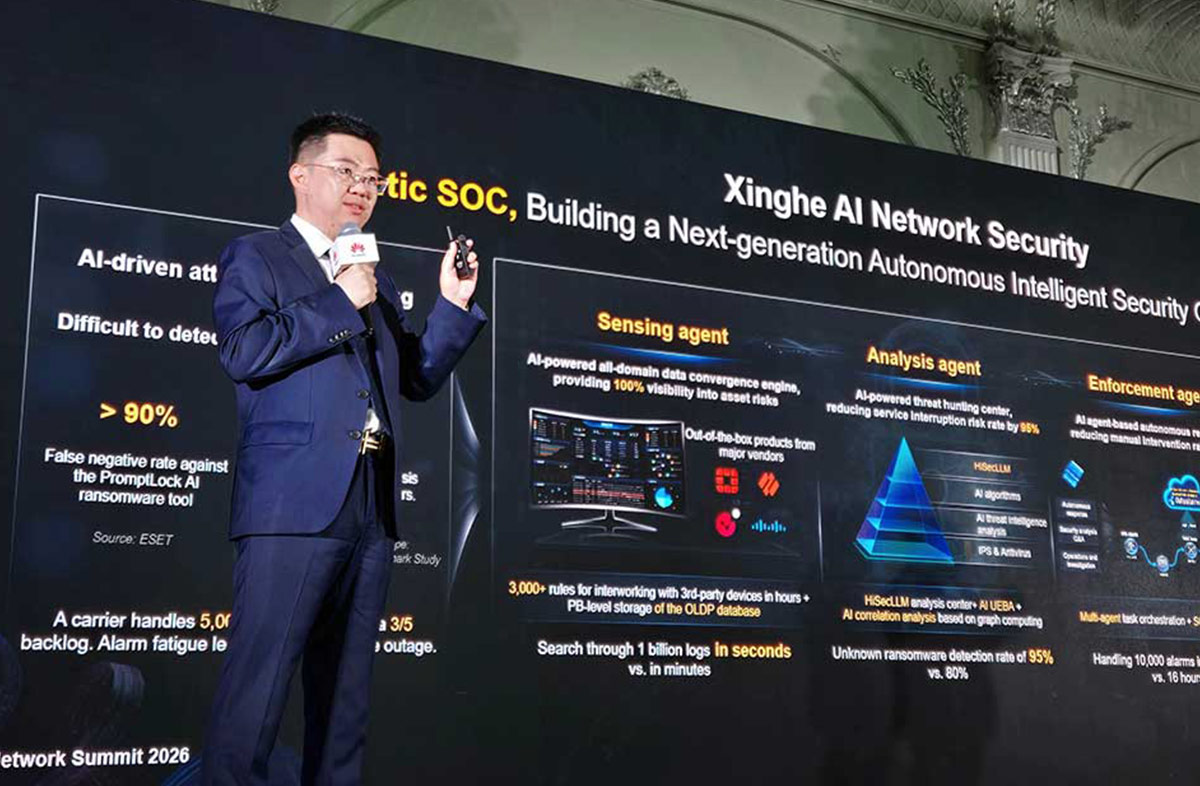
Huawei introduced its new Xinghe AI Network Security Agentic SOC (Security Operations Center) solution during the Huawei Network Summit 2026 Nor...

Microsoft introduced a new PostgreSQL extension for Visual Studio Code that allows developers to manage PostgreSQL databases directly from the e...

Red Hat announced the upcoming availability of Red Hat Enterprise Linux 10.2 and Red Hat Enterprise Linux 9.8. The new versions build on the cap...

SAP and Microsoft announced that in the coming weeks SAP Business Data Cloud (BDC) will become available in Microsoft Azure data centers in Swit...

Huawei introduced new F5G-A solutions and products during the Huawei Intelligent Africa Congress 2026 in Cairo, Egypt. As part of the event, the...