
HPE Highlights AI Networking Leadership with Expanded Self-Driving Network Capabilities
Hewlett Packard Enterprise (HPE) is continuing to strengthen its AI-powered networking portfolio by integrating technologies acquired through Juniper Networks across its enterprise networking solutions. According to HPE, the latest developments build on years of investment in autonomous networking and AI-driven operations, enabling organizations to simplify network management while supporting increasingly distributed AI environments.
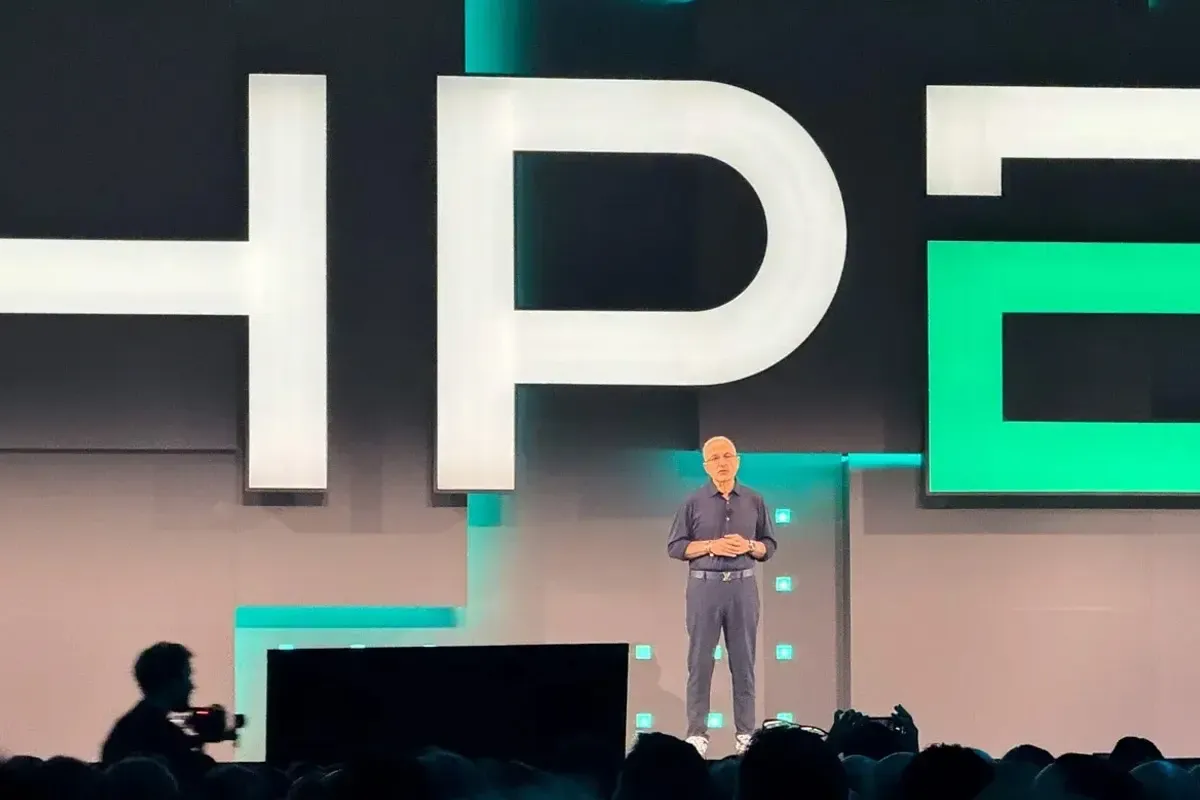
During HPE Discover 2026, the company introduced new AI-powered networking capabilities spanning data center networking, routing, agentic AIOps, and security. These enhancements are designed to help organizations automate network operations, improve performance, and support the growing demands of AI-driven workloads.
Sujai Hajela, Executive Vice President and General Manager of Enterprise Campus and Branch at HPE Networking, explained that the company's long-term strategy has focused on developing self-driving networks capable of autonomous decision-making rather than simply adding AI features to existing platforms.
According to HPE, its networking architecture is already prepared for agentic AI, allowing autonomous agents to perform operational tasks, orchestrate workflows, and continuously improve network performance with minimal manual intervention.
The company attributes much of this capability to the experience gained through Marvis AIOps, the AI platform originally developed by Mist Systems. Over the past decade, Marvis has continuously learned from real-world network incidents, user experiences, and operational scenarios, creating what HPE describes as an "episodic memory" that enables more intelligent automation and problem resolution.
HPE also highlighted the importance of AI skills alongside AI agents. According to the company, while AI agents can determine what actions should be taken, specialized AI skills enable those actions to be executed automatically, providing a higher level of operational autonomy across enterprise networks.
The latest innovations further expand the integration between the Aruba and Mist networking platforms. HPE states that the shared cloud-native microservices architecture allows development teams to innovate more efficiently, accelerating the delivery of new networking capabilities across the unified portfolio.
Recent industry recognition also supports HPE's strategy. In the latest Gartner Magic Quadrant for Enterprise Wired and Wireless LAN Infrastructure, HPE was positioned among the market leaders, with Gartner highlighting the company's AI-driven operations, automation capabilities, and unified networking platforms.
HPE also reported strong business momentum following the integration of Juniper Networks. During its latest fiscal quarter, the company's networking business recorded revenue growth of 148%, while networking orders more than doubled. According to HPE, the combined networking portfolio and its vision for self-driving networks continue to gain traction among enterprise customers seeking AI-ready infrastructure.